Editors Note: A Pinellas County Field Perspective
This article reflects Rick Orr's observations from approximately 30 years of working with turfgrass under Pinellas County conditions. It is intended to complement university research by describing what he has observed while managing lawns locally. It should not be interpreted as a claim that the same results will occur with every cultivar, property or growing condition.
Sugarcane mosaic virus, commonly called SMV, has become a familiar problem in St. Augustine grass lawns. In Pinellas County, the disease commonly becomes noticeable during the cooler part of the year, when an otherwise green St. Augustine lawn can suddenly develop patches of lime green, yellow, rust or brown turf.
After 30 years of working with lawns in Pinellas County, my advice to homeowners is simple:
Don't panic, and don't automatically assume you need to replace the lawn.
There is no chemical cure for SMV. But in my experience here in Pinellas County, mild to moderate cases are rarely fatal. I've seen many affected lawns regain their normal green appearance as conditions improve in the spring and early summer.
Your lawn has the SMV flu. The approach I've found most useful is what I call Tender Loving Care(TLC): Plenty of fluids, good food and rest.
SMV Doesn't Usually Affect the Lawn Uniformly
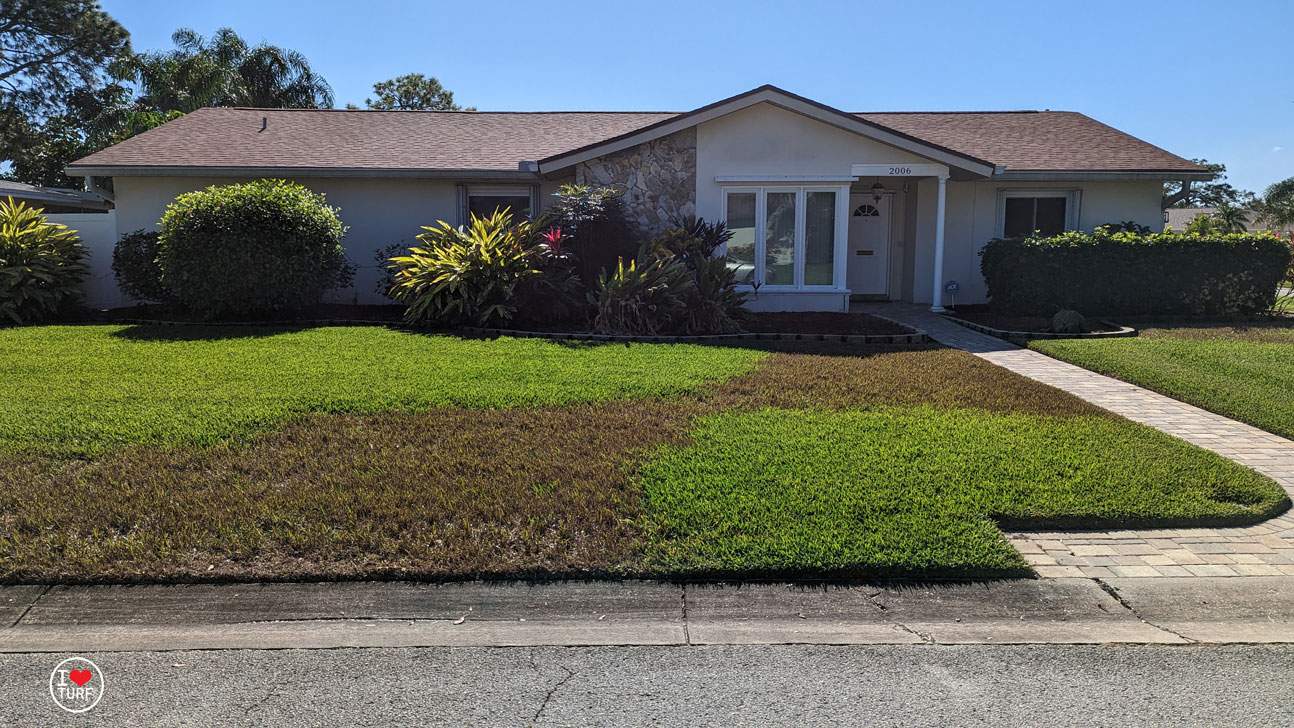
One of the things I've observed over the years is that SMV rarely shows up uniformly over an entire property.
One part of the lawn may develop obvious discoloration while another section remains relatively normal.
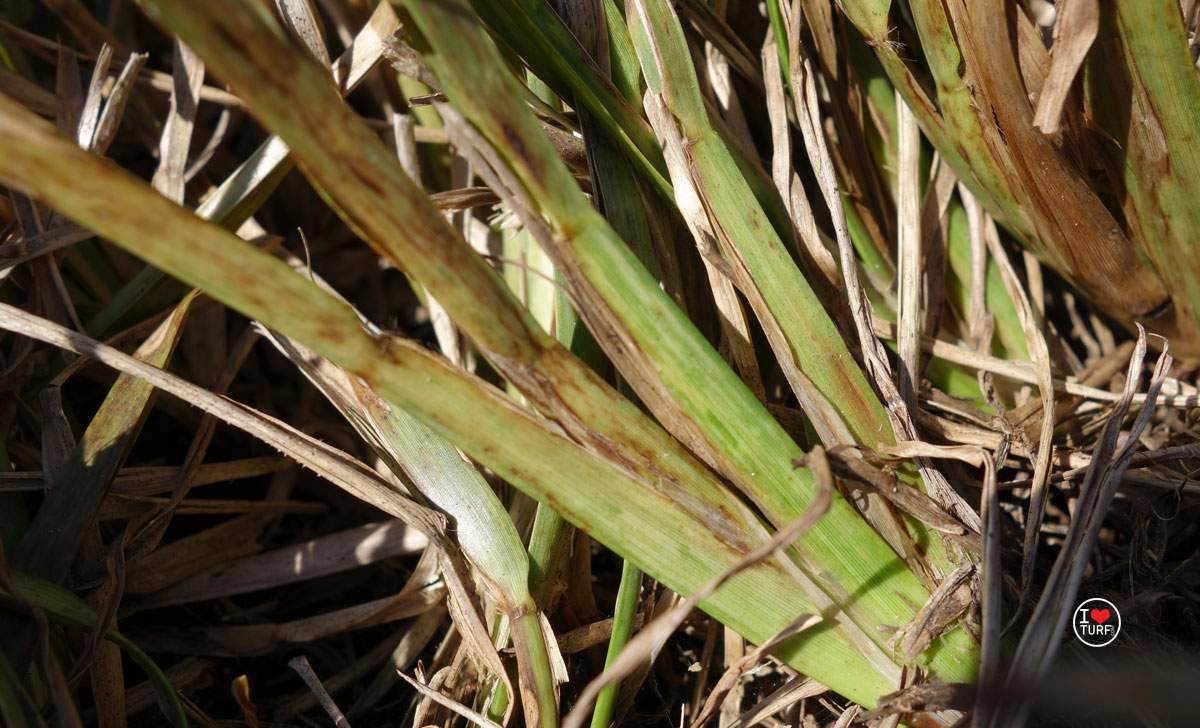
Affected St. Augustine grass can turn lime green, yellowish, rusty or brown. That appearance can be alarming, particularly when a lawn that looked healthy a few weeks earlier suddenly begins changing color.
But discoloration doesn't necessarily mean the turf is dying.
In many of the Pinellas County lawns I've dealt with, I've seen the appearance improve as the weather warms and the St. Augustine grass returns to active growth.
That's why I am reluctant to recommend tearing out an established lawn simply because SMV has appeared.
Fluids: Keep the Lawn from Drying Out
I often describe water as the fuel that powers the lawn's ecosystem.
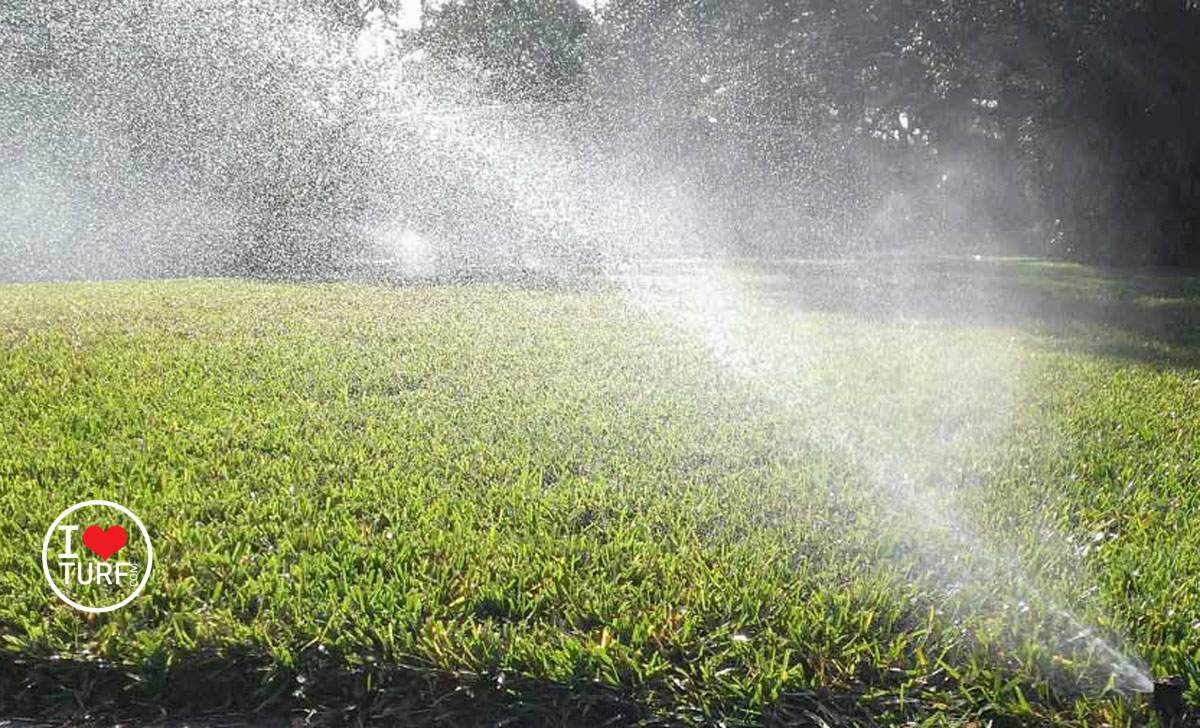
An SMV-affected St. Augustine lawn is already under stress. This isn't the time to deliberately dry it out.
Continue irrigating the lawn as you would healthy St. Augustine grass, adjusting for rainfall and actual soil conditions. Under the conditions I've encountered in Pinellas County, maintaining adequate moisture can be particularly important while the lawn is trying to recover.
The objective is consistent moisture, not saturated soil.
This is an important distinction. Watering a stressed lawn doesn't mean flooding it. You're trying to eliminate additional drought stress while allowing the turf's natural survival mechanisms to work.
Rest: Give Your Sick Lawn a Break
Think about what you'd do if you had the flu.
You probably wouldn't go outside and run five miles.
Your St. Augustine grass deserves the same consideration.
Reduce unnecessary wear and tear while the lawn is struggling. Keep foot traffic to a minimum where practical. Kids, dogs, equipment and repeated traffic all place additional stress on turf that's already dealing with a viral infection.
Mowing deserves particular attention.
If the grass isn't growing enough to require weekly mowing, don't mow it simply because Tuesday is mowing day.
Extend the mowing interval.
Your objective isn't to make a sick lawn look freshly manicured every seven days. Your objective is to give it enough leaf area and time to recover.
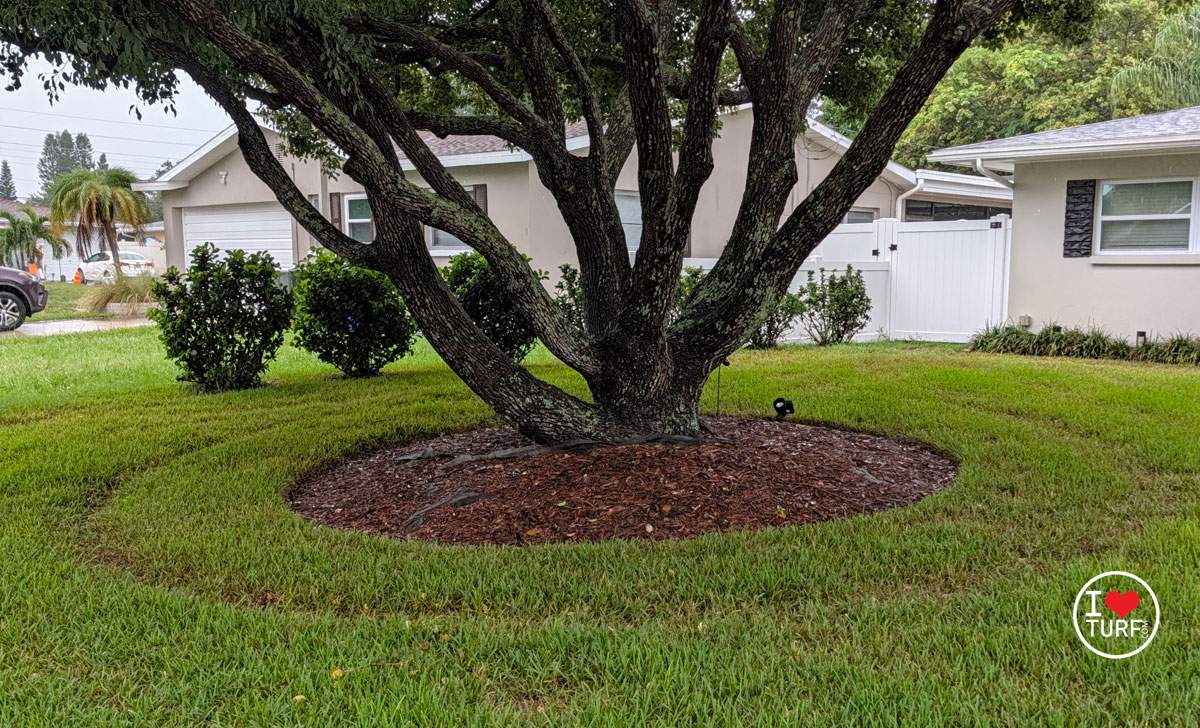
Food: Don't Try to Fertilize Your Way Out of SMV
Fertilizer is where homeowners and lawn-care companies can get into trouble.
When someone's lawn starts turning yellow, the natural reaction is:
It needs fertilizer.
Maybe. Maybe not.
Too much fertilizer can stress turf just as inadequate nutrition can. When St. Augustine grass is semi-dormant and showing SMV symptoms, I prefer the conservative approach.
If the lawn was healthy and receiving regular fertilizer applications before the SMV symptoms appeared, I generally don't see a reason to suddenly increase fertilizer just because the grass has changed color.
The virus isn't a nitrogen deficiency. More fertilizer isn't going to cure it.
A weak, genuinely undernourished lawn is different. In those situations, I've used light fertility to support the turf, rather than attempting to push excessive growth.
The key is recognizing the difference between feeding the turf and trying to fertilize away a virus.
You can't fertilize away SMV.
Can You Prevent the Virus from Spreading?
This is one of the more complicated questions.
SMV doesn't stay conveniently inside property lines.
Over the years, I've watched lawn-care companies and homeowners put enormous emphasis on mower sanitation as though cleaning a mower could guarantee that SMV wouldn't reach another lawn.
I don't believe it's that simple under real-world Pinellas County conditions.
Grass clippings and lawn equipment may provide pathways for movement, but they aren't the only things moving through our landscapes. We have wind, rain, wildlife, people, pets and equipment constantly moving between turf areas.
That makes completely isolating a residential lawn extraordinarily difficult.
Good sanitation practices are reasonable. But homeowners should have realistic expectations about what sanitation can accomplish.
Cleaning a mower is not a guarantee that SMV won't reach your lawn.
Should You Replace the Lawn with Bitter Blue?
Bitter Blue St. Augustine grass has been promoted as an alternative when SMV becomes a recurring concern.
Replacing an entire lawn, however, is expensive.
And in my experience, the results have been mixed.
That creates a straightforward economic question:
Do you spend thousands of dollars replacing a lawn immediately, or first give the existing turf an opportunity to recover?
For the mild to moderate SMV cases I've encountered in Pinellas County, I favor patience.
Give the existing lawn TLC. Maintain adequate moisture. Reduce unnecessary mowing and traffic. Don't overfertilize it. Let spring and early-summer growing conditions give the St. Augustine grass an opportunity to regain its color.
If the turf continues deteriorating or begins dying rather than merely discoloring, then we have a different discussion.
But replacement shouldn't automatically be the first response to seeing mosaic symptoms.
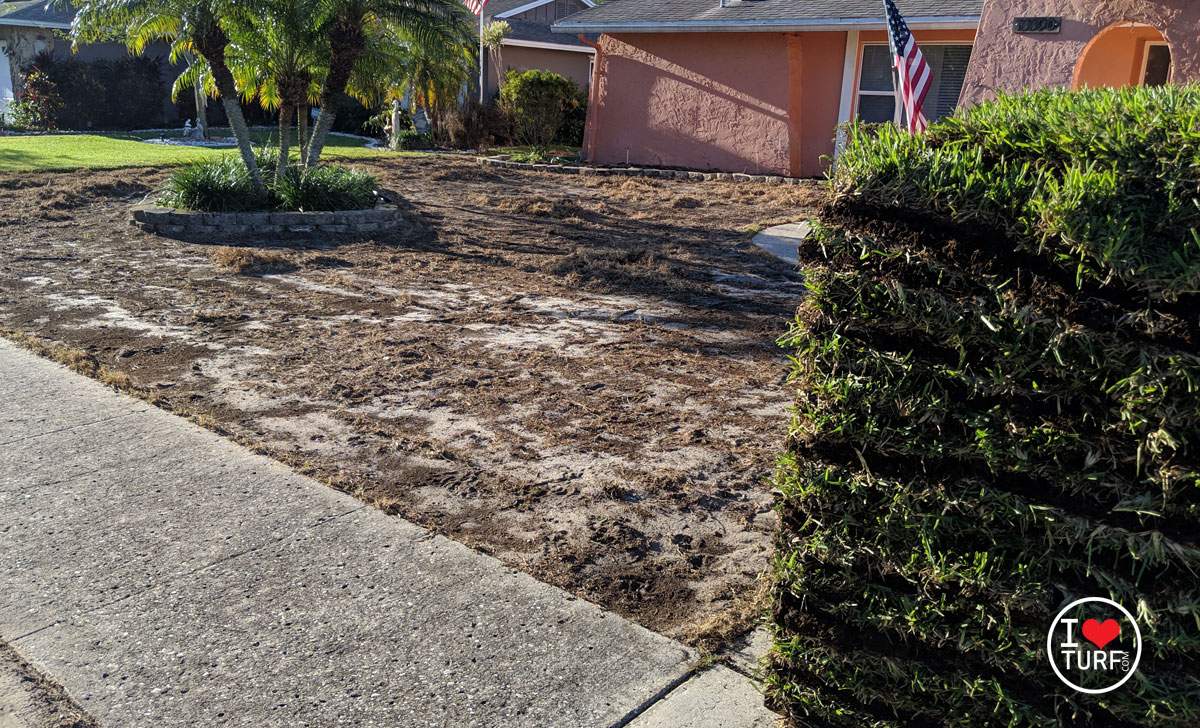
Thirty Years of Lawns Have Taught Me to Be Patient
University research is extremely valuable. It gives our industry information based on controlled studies and observations across a broad range of Florida growing conditions.
But turf management is also local.
Pinellas County has its own combination of soils, reclaimed water, irrigation practices, rainfall patterns, shade, mature landscapes and an almost year-round growing environment.
After working with those conditions for 30 years, one lesson keeps repeating itself:
Sometimes the best thing you can do for a sick lawn is stop trying so hard to fix it.
SMV can look terrible.
That doesn't necessarily mean the lawn is finished.
Give it fluids. Give it appropriate food. Give it some rest.
And, most importantly, give it time.