
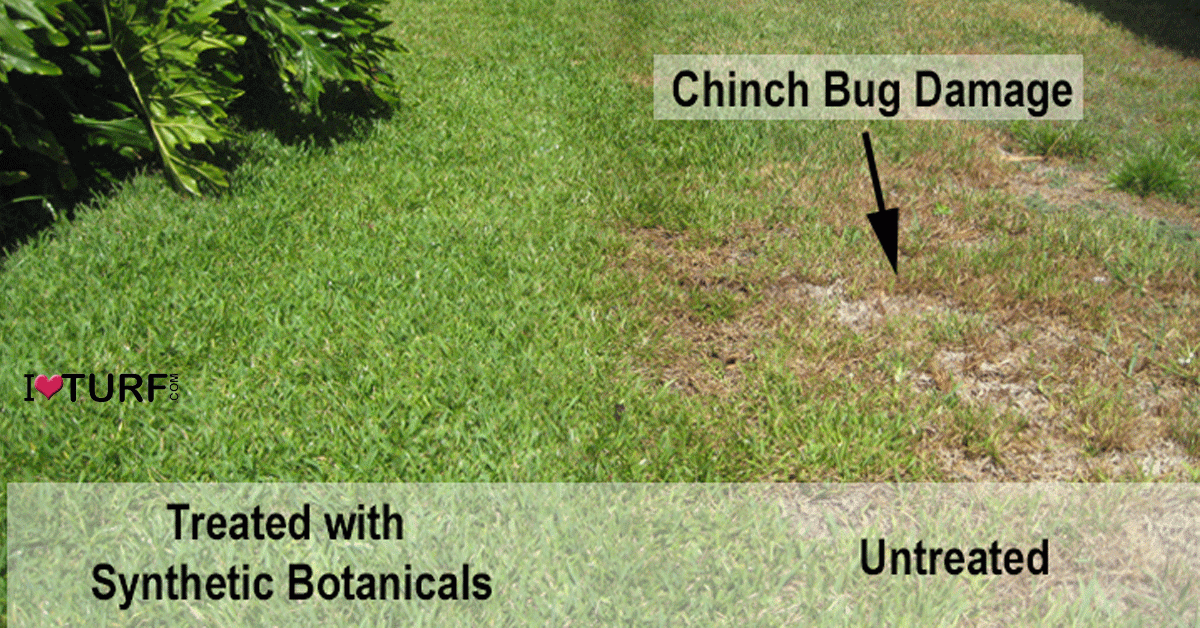
Chinch Bug Season – May - October
Chinch Bugs like it hot and dry. The hot, dry spring in Pinellas is the beginning of the chinch bug season. The scattered thunderstorms of summer will aid reproduction, and populations will explode. It is those exploding populations that can wipe out an entire lawn in a week.
Chinch Bugs Are Small
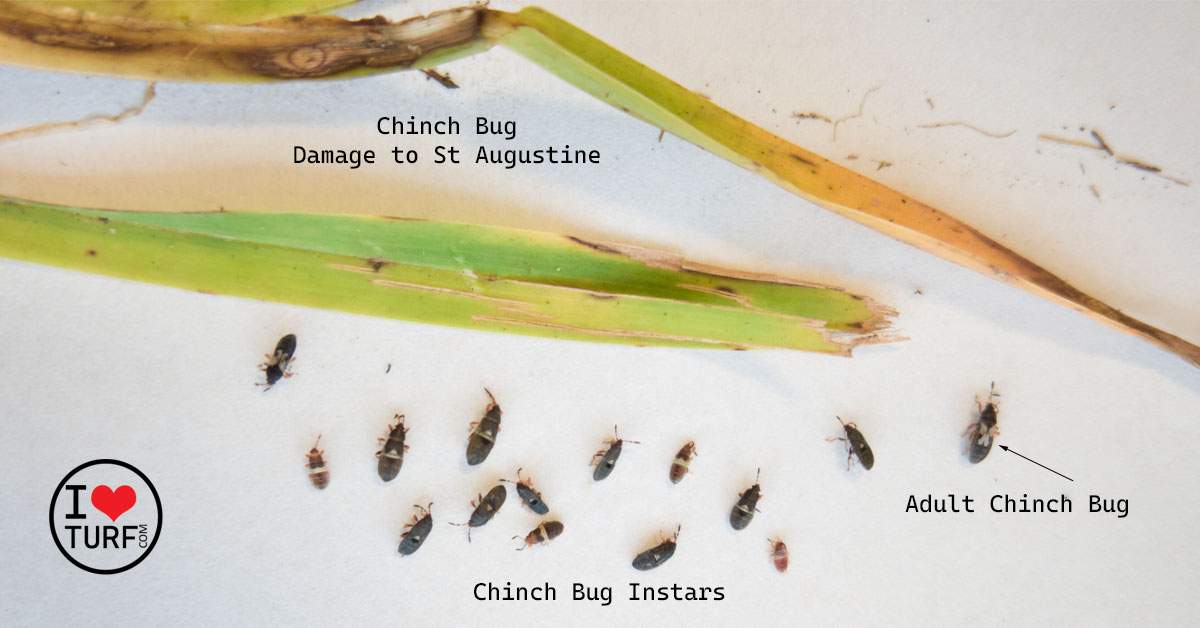
Chinch Bugs are small! They are about the size of a pinhead. When disturbed, they scramble for the nearest cover to hide. Their small size and shy nature make them hard to find in a lawn. But they are there – every St Augustine turfgrass lawn in Pinellas County has at least a few chinch bugs in or near the lawn. And when St Augustine weakens from water stress, the chinch bugs attack.
Not a Pest but a Predator
Chinch Bugs are not pests; they are predators. As a predator, their role is to remove weak grass and make room for more adapted weedy species. Chinch bugs will rarely attack healthy St Augustine grass. Chinch bugs see water-stressed St Augustine grass as weak and will attack it.
Chinch Bugs Kill St Augustine Grass
Chinch Bugs feed on the sap of St Augustine grass and inject a toxin that prevents the movement of water in the plant. This kills the grass plant. Chinch Bug damage is so complete and so fatal to St Augustine grass that there is no recovery – it is dead!
Chinch Bug Life Cycle
When chinch bugs attack weak grass, a firestorm of activity starts. First, the weak water-stressed grass is attacked. As populations explode, healthy grass is attacked and injected with toxins, creating even weaker grass. This cycle of feed, breed, and attack expands exponentially and will not stop until the lawn is destroyed.
SWFWMD Causes Chinch Bugs
An organic solution to chinch bugs is to prevent water stress. But that requires freedom to water as often and as much as the rainfall and weather dictate. But SWFWMD has removed that freedom and required self-supplied irrigation systems to be used only on a certain day, regardless of when the lawn needs water. The consequences of water restrictions are more water-stressed St Augustine grass, more chinch bugs, and increased usage of pesticides.
What to Look For
Chinch bug damage mimics heat and water stress, making it difficult to discern whether it is chinch bugs or a broken sprinkler. However, chinch bug damage has distinct symptoms:
- Chinch bugs usually start along the edges. Edges are usually the first to water stress in a lawn. Wherever you have water-stressed grass, you will find chinch bugs – they go together like hamburger and fries.
- Incomplete Damage – the damage is selective, in contrast to water stress damage, which is equal damage over the area. Look for lone survivors – individual grass plants alive and well - in the damaged area.
- Chinch bug-damaged areas will have a “paper bag brown” color, whereas water stress is often tan or straw colored.
- Yellow Leaves along the edges of the damage caused by the injection of the toxin. The feeding progresses from a central point and moves outward. The pattern will be dead grass –> yellow leaves on the edges -> healthy turf.
- The presence of Chinch Bugs – If you cannot find any chinch bugs, then probably something else caused the damage. Yet finding the small, shy bugs is difficult. Soap drenches or physically investigating the edges of undamaged turf are the best methods to get visual verification.
- Finding a few adults does not indicate chinch bugs are the culprit. However, finding adults and the little orange nymphs is a strong indicator that chinch bugs are at work, feeding, breeding, and expanding the population. This leads to devastating results.
How to Control Chinch Bugs
Chinch Bug populations are easily reduced with modern insecticides. Since the chinch bugs live in the base of the leaves, using a liquid insecticide is superior to granular insecticides. Chinch bug damage is lethal; the lawn will not recover and will need to be replaced if it is attacked by chinch bugs. Therefore, preventive applications during peak seasons are better than curative applications. Preventative Insecticide applications every 30 to 60 days during the chinch bug season will protect your lawn.
Water-stressed turf is a prime target of chinch bugs. If your lawn is dry and untreated for chinch bugs, the chinch bugs will not be far behind. Get it treated soon.